When Behaviour Precedes Strategy: The Boeing Case Study
By Third Axis Consulting Exploring how behavioural patterns, not intent, shape strategy and outcomes. In the wake of organizational crises, it is tempting to reverse-engineer intent from outcomes, to assume a company consciously chose a flawed strategy, a risky product or an ill-fated communication plan. But in our work at Third Axis Consulting (TAC), we consistently find something more fundamental at play: Strategy does not precede behaviour. Behaviour drives strategy. The case of Boeing offers a sobering, high-stakes example of this principle in action. And not just at a tactical level, but at the level of existential organizational direction.The Context: A Crisis with Deep Roots
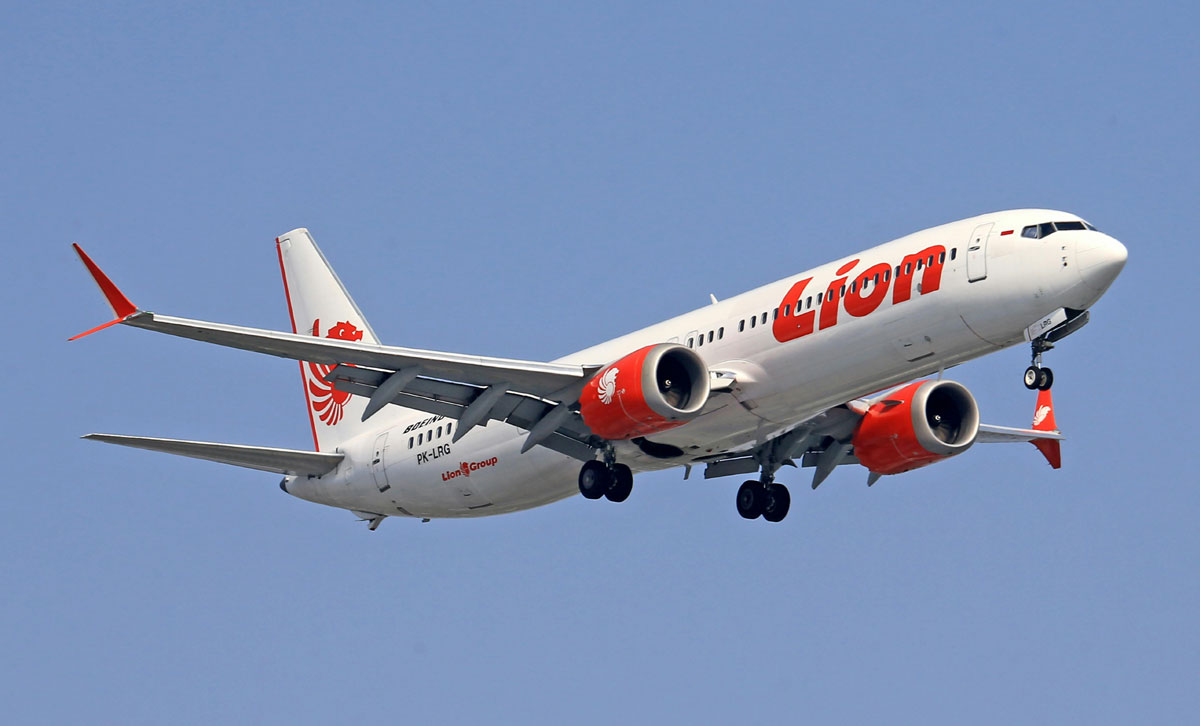
In 2018 and 2019, two fatal crashes involving the Boeing 737 MAX shook the aviation industry. Investigations revealed critical flaws in the aircraft’s Manoeuvring Characteristics Augmentation System (MCAS) and a broader pattern of safety oversight, regulatory pressure and internal misalignment. But the technical findings alone do not explain what happened. To truly understand how Boeing’s strategic responses evolved, first in product, then in positioning, we must examine the behavioural architecture of the organization at the time.Behavioural Patterns Driving Product Strategy
Before the 737 MAX crisis, Boeing’s internal culture had already shifted from its engineering-first roots to a more finance-driven posture. This was not merely a change in leadership or structure, it reflected a dominant behavioural pattern across key layers of the organization:- Escalation avoidance: Engineers raised design concerns, but these were often softened, sidelined or overridden as they moved up the chain.
- Speed over reflection: Mid-level managers, incentivized for delivery timelines, developed a behavioural bias toward certification acceleration.
- Regulatory pattern drift: Coordination with the FAA became performative in parts, focused more on checklists than on grounded safety dialogue.
Post-Crisis: A New Strategy Rooted in the Same Soil
Following the tragedy, Boeing initiated a reputational repair strategy. But here again, we see that the organizational behaviour led the way, often in contradiction to the stated narrative.- Crisis containment over truth-telling: Initial internal responses leaned toward protecting institutional credibility rather than fully acknowledging fault.
- Leadership messaging drift: Public apologies were at times out of sync with internal actions, creating dissonance within teams.
- Strategic pivot to defence: As commercial trust wavered, Boeing increased its focus on defence contracts, seemingly strategic, but also a behavioural retreat to a more stable domain with lower consumer scrutiny.
When uncertainty rises and trust erodes organizations revert to safer, more controllable contexts, often unconsciously.
The TAC Principle in Action
At Third Axis, we use tools like the Flow Code, PING Scan and CPS (Core Pattern Signature) to map how behaviour shows up before strategy is codified. In a simulated TAC OrgPlaybook scan of Boeing’s pre-crisis environment, we likely would have surfaced:- A Beta Bubble in leadership (apparent clarity masking deep misalignment)
- Grounding failure in mid-layer decision making (difficulty connecting operational reality to strategy)
- Weak PING discipline in regulatory coordination (poor pattern recognition and truth surfacing)
Takeaway: Patterns Before Plans
Boeing did not set out to prioritize market timelines over safety. Nor did it deliberately design a reputational response that would deepen internal confusion. What happened was subtler and more instructive: A company’s strategy is only as clear as its dominant behavioural pattern allows it to be. For leadership teams, this insight is both confronting and empowering. It means that lasting transformation does not begin with new KPIs or org charts. It begins with understanding the behavioural choreography already playing out. That is the work. And it is what the TAC approach is built to surface, before crisis makes it unavoidable.Interested in a behavioural pattern scan of your organization?
Let us begin where strategy really starts. With behaviour.